
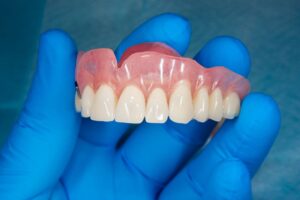
Every year, dentists around the world design countless sets of dentures to help patients enjoy more confident smiles and easier oral function. Indeed, dentures are so common that they are almost taken for granted! However, it has not always been that way. In fact, dentures have taken a long road to modern times. Would you like to know how they have evolved over the centuries? Continue reading below to discover fascinating information.
Ancient Origins: Early Materials and Craftsmanship
The earliest denture-like devices date back thousands of years. In ancient Italy, the Etruscans created prosthetic teeth from human or animal teeth and secured them with gold wire. Other cultures also searched for ways to replace missing teeth. Historical evidence suggests that some ancient groups used carved stone, shell, or animal parts in an attempt to restore the look of a complete smile.
Although these first prosthetics lacked comfort and strength, they established an important idea: replacement teeth could improve daily life. That belief continued to drive progress across later centuries.
Notable Historical Examples: Famous Figures and Early Techniques
One of the most famous stories in denture history involves George Washington. Many people still believe that he wore wooden teeth, but that claim is false. Evidence suggests that he owned several sets of dentures, which used a mix of materials, including human teeth, animal teeth, ivory, and metal components. These sets reflected the limited options of the era and the difficulty of creating a secure, comfortable fit.
Ivory remained a common denture material for many years, but it came with serious drawbacks. It could stain, develop odor, and wear down over time. It was also expensive, which meant that dentures were a mark of wealth and status for many years.
19th Century Developments: The Impact of Sugar and Changing Materials
The 1800s brought major changes. As sugar became more common in daily diets, tooth decay increased, and the demand for replacement teeth rose. Denture makers responded in troubling ways at first, sometimes using human teeth taken from battlefields or from the deceased. This practice raised obvious ethical and sanitary concerns. Even so, it pushed the field toward safer, more reliable materials and methods as public demand continued to grow.
Porcelain and Rubber Innovations: A Move Toward Durability and Accessibility
New materials soon transformed denture design. Porcelain offered a cleaner and more attractive alternative compared to other materials, though it could appear too bright and was prone to breakage. Dentists then improved denture mechanics with springs and other features that helped the upper and lower pieces work together more effectively. In the mid-1800s, hardened rubber bases opened the door to wider access. This material cost less than gold and adapted more easily to the shape of the gums, which made dentures more practical for a larger part of the population.
The Modern Era: Acrylic Resin, Digital Technology, and Implant-Supported Solutions
The modern era introduced acrylic resin, which became the standard for denture bases because it balances durability, appearance, and comfort. This material allowed dentists to produce dentures that looked more natural and fit more accurately. In recent years, computer-guided fabrication and other advancements have made tooth replacement easier and more precise than ever.
Modern dentures prove that good things take time! If you are exploring your tooth replacement options, you can be grateful for the advancements that have made it so easy to regain a complete and highly functional smile.
Meet the Practice
At Willow Run Dental Association, our team is proud to provide top-quality care in a welcoming environment. We offer multiple forms of tooth replacement, including conventional dentures, implant dentures, and more. To learn more about us and how we may be able to serve you, contact our Auburn, ME, office at 207-352-2825.